Overview
A structured professional learning series designed to support early childhood educators in building foundational teaching practices through reflection, application, and coaching support.
Context:
New educators entering our program brought a wide range of experiences, confidence levels, and familiarity with curriculum and instructional expectations. While onboarding provided initial information, there was a clear need for ongoing, structured support that helped educators translate expectations into daily practice.
At the same time, instructional coaches, needed a consistent framework to guide conversations, goal-setting, and follow-up support across classrooms.
My Role:
I led the design and development of a structured professional learning series for early childhood educators. This work included:
- Designing a sequenced learning experience aligned to program goals.
- Developing multimedia instructional materials, including slide decks and narrated video presentations.
- Creating learning packets and tools to support reflection and application.
- Integrating collaborative learning opportunities to deepen engagement.
- Designing implementation goals to support transfer of learning into practice.
- Securing Ohio Approved professional development hours.
- Training instructional coaches to facilitate the series and support ongoing implementation.
Design Approach:
The series was designed using principles of adult learning, with a focus on:
- Relevance: Connecting content directly to educators’ daily classroom experiences.
- Active Engagement: Incorporating reflection, discussion, and application within each session.
- Coherence: Aligning session content with coaching cycles and program expectations.
- Sustained Support: Structuring learning across multiple sessions rather than one-time training.
Each session followed a consistent structure:
- Grounded in practice
- Exploration of key concepts
- Application to classroom context
- Connection to coaching support
Implementation:
The series was designed as a set of asynchronous modules to support flexible access while still maintaining a structured, coaching-supported learning experience.
Instructional coaches facilitated each session by viewing short, narrated video modules (15-20 minutes) alongside educators and providing accompanying learning packets. This approach allowed for shared understanding while accommodating the limited planning time available to teachers.
Following each module, coaches supported educators in completing reflection activities and engaging in peer discussion. Together, they identified a focused implementation goal aligned to the educator’s role and current practice, ensuring that new learning was immediately applied in the classroom.
Outcomes:
These outcomes reflect how the design of the series supported educator engagement, reflection, and the application of learning into classroom practice.
- Engaged 45+ educators during the 2025-2026 school year to date, with ongoing participation in collaborative reflection through shared learning tools.
- Increased educator engagement in application-focused discussion, extending learning beyond initial training sessions.
- Strengthened alignment between professional learning and coaching cycles through structured goal-setting and follow-up support.
- Supported educators in implementing targeted instructional strategies aligned to their role and classroom context.
- Contributed to a sustainable, scalable model for job-embedded professional learning across the program.
Design Artifacts:
These artifacts illustrate how the series was intentionally designed to move beyond content delivery and support reflection, collaboration, and classroom application.
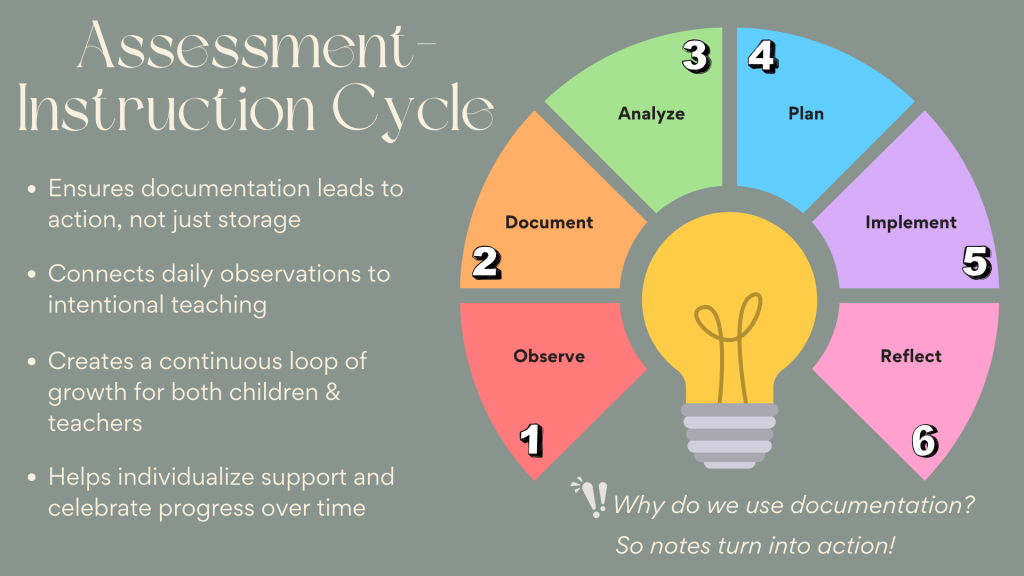
Conceptual Framework
This slide introduces a core framework used throughout the series to help educators connect assessment, planning, and instruction in a continuous cycle.
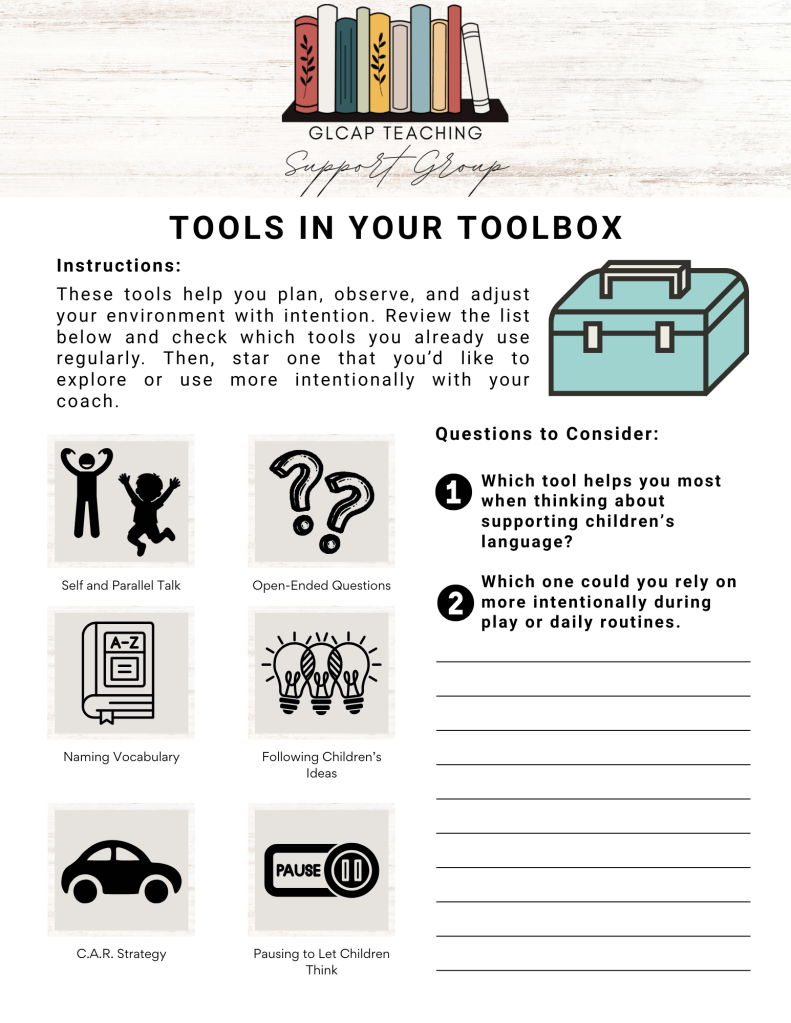
Application Tools
Participants used structured planning and reflection tools to apply new learning directly to their classroom context, bridging the gap between training and practice.
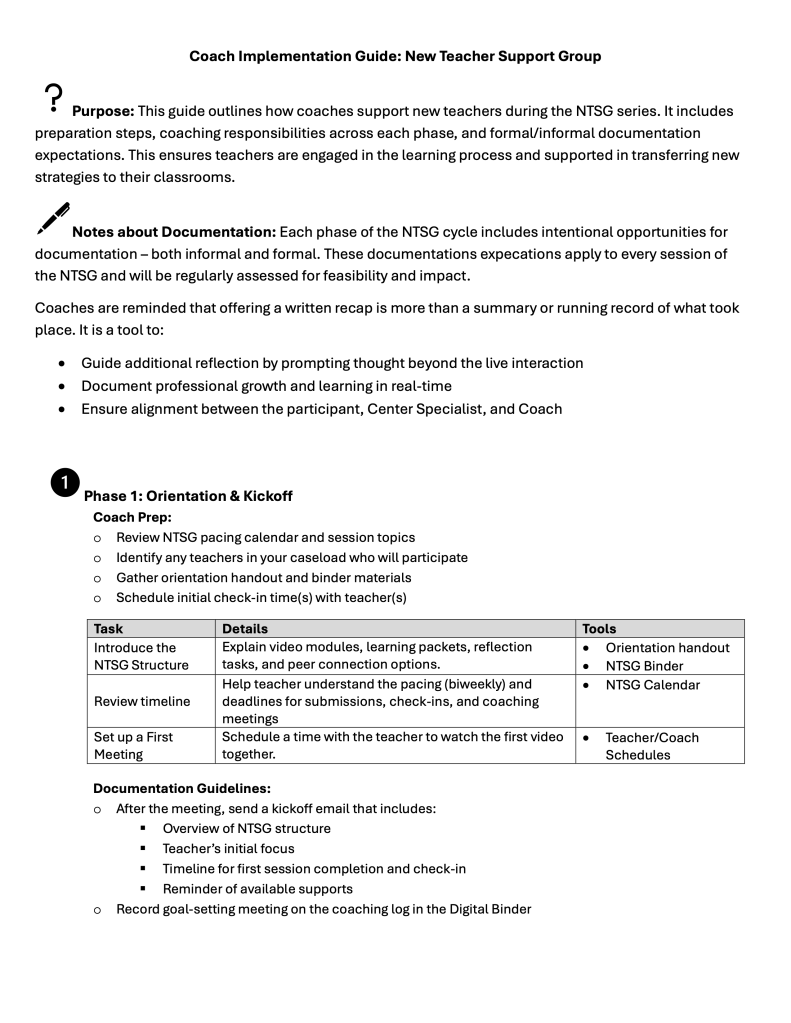
Coaching Alignment
Coaching supports were designed alongside the training to ensure consistency between professional learning and follow-up support. Coaches used these tools to guide goal-setting, observation, and feedback conversations.
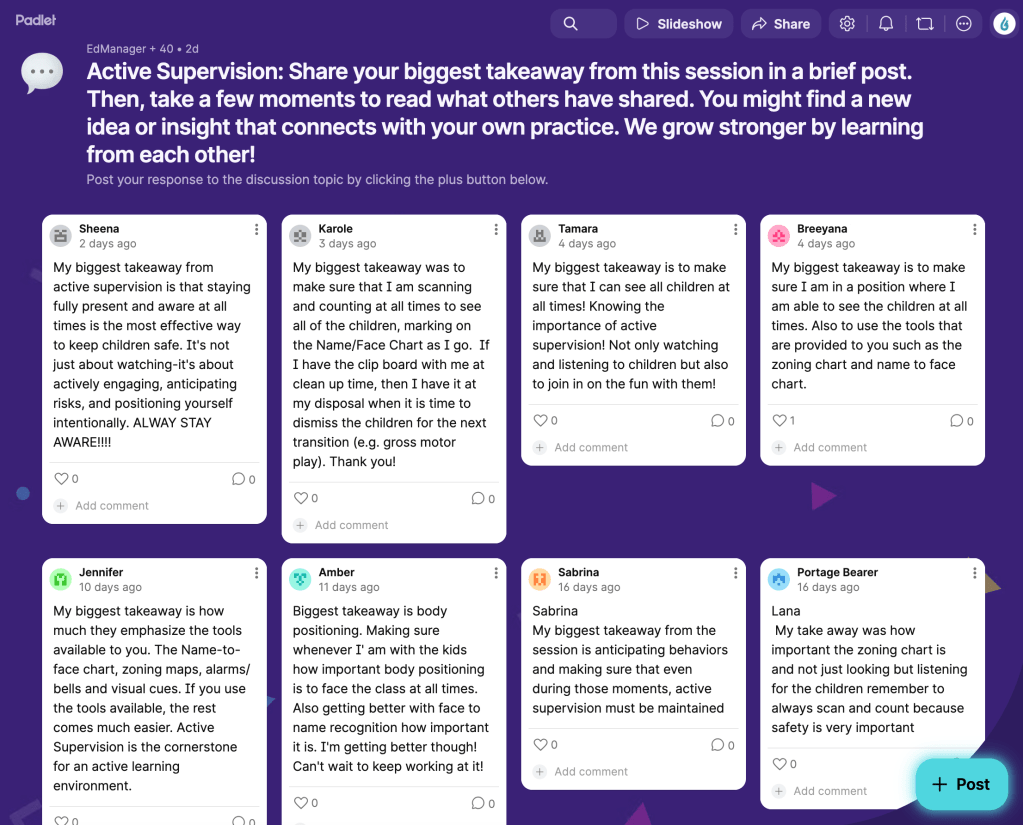
Collaborative Learning
Participates engaged in shared reflection and idea-building through collaborative tools, allowing them to learn from one another and see how practices evolve across classrooms. This approach made individual learning visible across the group and supported the development of a shared understanding of effective practice.
Case Studies
Explore case studies that highlight how professional learning design translates into educator practice and classroom impact. (Coming Soon!)
 Jennifer Lee | Instructional Design for Early Learning