Practice Based Coaching (PBC) Module Series Overview
This professional learning series was designed to strengthen the implementation of the Practice-Based Coaching (PBC) model across multiple program types. This 5 module series provides a structured, application-focused approach to coaching that builds consistency, clarity, and confidence for coaches working in diverse early childhood settings.
Context:
The development of this series was grounded in the need for a more cohesive and internally aligned approach to coaching. Previous training experiences varied in content and delivery, leading to inconsistent understanding and implementation of the PBC cycle. Coaches were navigating multiple expectations without a shared framework, making it difficult to sustain meaningful, goal-driven coaching practices across sites.
My Role:
I led the design and development of a multi-session professional learning series focused on strengthening coaching practices across programs. My work included:
- Designing a five session module series aligned to the Practice-Based Coaching cycle.
- Developing training materials, including slide decks and participant learning packets.
- Creating case studies and role play experiences to support real-world application.
- Embedding opportunities for collaboration, reflection, and discussion.
- Aligning content with internal coaching systems and expectations.
- Facilitating sessions and supporting coaches in applying the learning in practice.
Design Approach:
This series was designed with adult learners in mind, emphasizing practical application and relevance. Key considerations included:
- Relevance: Grounding learning in real coaching scenarios and classroom experiences.
- Active Engagement: Incorporating active learning through discussion, reflection, and role-play.
- Alignment: Connecting each module to the broader coaching cycle and program expectations.
- Sustainability: Structuring the series over time to allow for practice, reflection, and growth.
Each module followed a consistent flow:
- Connecting to current coaching practices
- Introducing and unpacking key concepts
- Applying learning through scenarios and discussion
- Linking back to coaching implementation
Connection to My Design Philosophy:
This series reflects my design philosophy centered on relevance, respect, and reflection.
Relevance is prioritized by grounding each module in authentic coaching scenarios. Rather than focusing on abstract concepts, participants engage with situations they regularly encounter, allowing them to immediately connect new learning to their daily work.
Respect is embedded in the design by acknowledging the varied experiences and contexts coaches bring to the learning. The modular structure allows participants to build on their existing knowledge while engaging in collaborative discussions that value multiple perspectives.
Reflection is woven throughout the series through structured opportunities to analyze practice, engage in role play, and consider how coaching strategies evolve over time. Each session creates space for participants to think critically about their decisions and refine their approach.
Implementation:
This series was implemented across coaching staff supporting multiple program types, including direct operated and partner classrooms. Sessions were facilitated in a structured sequence, with time between modules to allow for application in practice.
Coaches engaged in learning through a combination of whole-group training, small group discussion, and applied activities such as case studies and role play. Supporting materials, including learning packets and coaching tools, were used to reinforce key concepts and provide consistency across settings.
Ongoing facilitation and follow-up conversations supported coaches in transferring learning into their work with teachers, allowing the series to function as both professional learning and embedded support.
Outcomes:
The implementation of this series supported a more consistent and shared understanding of coaching practices across programs.
Coaches demonstrated increased clarity in navigating the coaching cycle, particularly in goal setting, observation, and feedback. The use of common language and tools helped strengthen alignment across sites, while applied learning experiences built confidence in facilitating coaching conversations.
The modular design also allowed for continued refinement, creating a foundation for ongoing professional learning and adaptation based on program needs.
Design Artifacts:
These artifacts illustrate how the series was intentionally designed to move beyond content delivery and support reflection, collaboration, and classroom application.
Module Structure & Learning Sequence
This module sequence was designed to build understanding progressively, moving from foundational knowledge to applied coaching practice.
Each of the five sessions focused on a key phase of the coaching cycle, allowing participants to revisit concepts, apply learning and deepen their understanding over time.
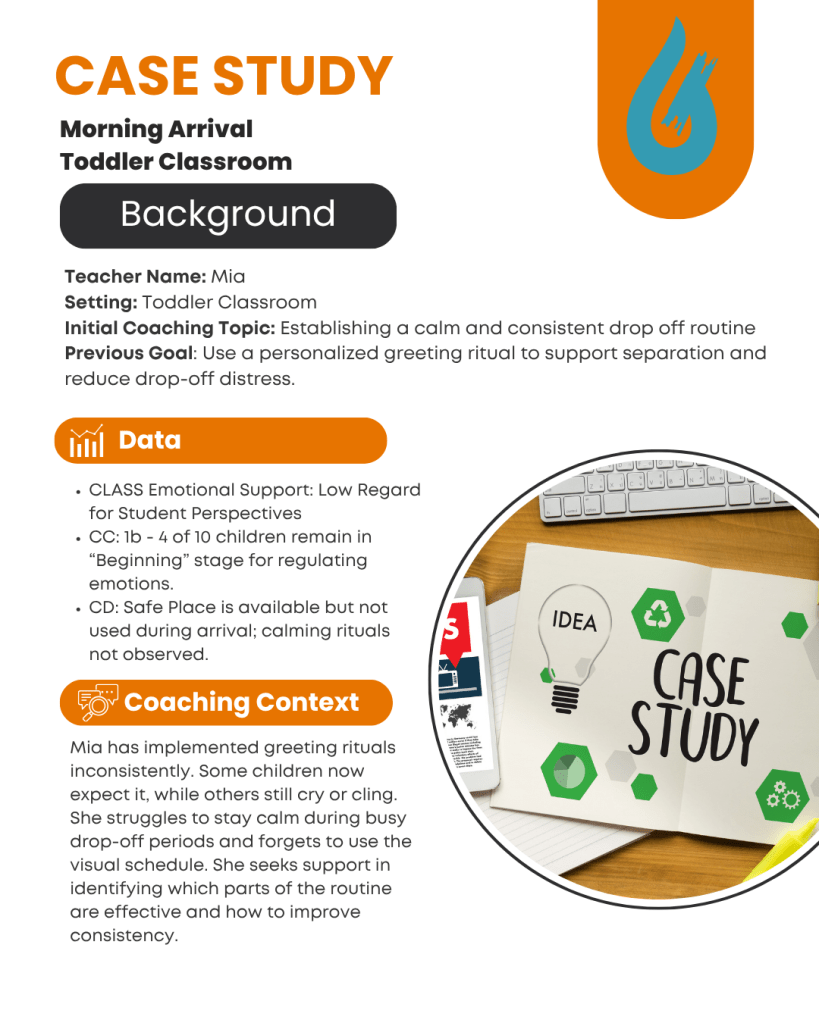
Case-Based Coaching Analysis
This case study was designed to simulate a real coaching scenario, allowing participants to analyze classroom practice, interpret data, and determine next steps within a coaching cycle.
Participants reviewed a classroom scenario across multiple observations, identifying patterns in teacher practice and child response. Through guided prompts, they determined areas of strength, surfaced instructional challenges, and identified a focused goal for coaching support.
This activity positioned participants as decision-makers, requiring them to apply the PBC framework in a way that mirrors real coaching conversations and supports transfer into their own work with educators.
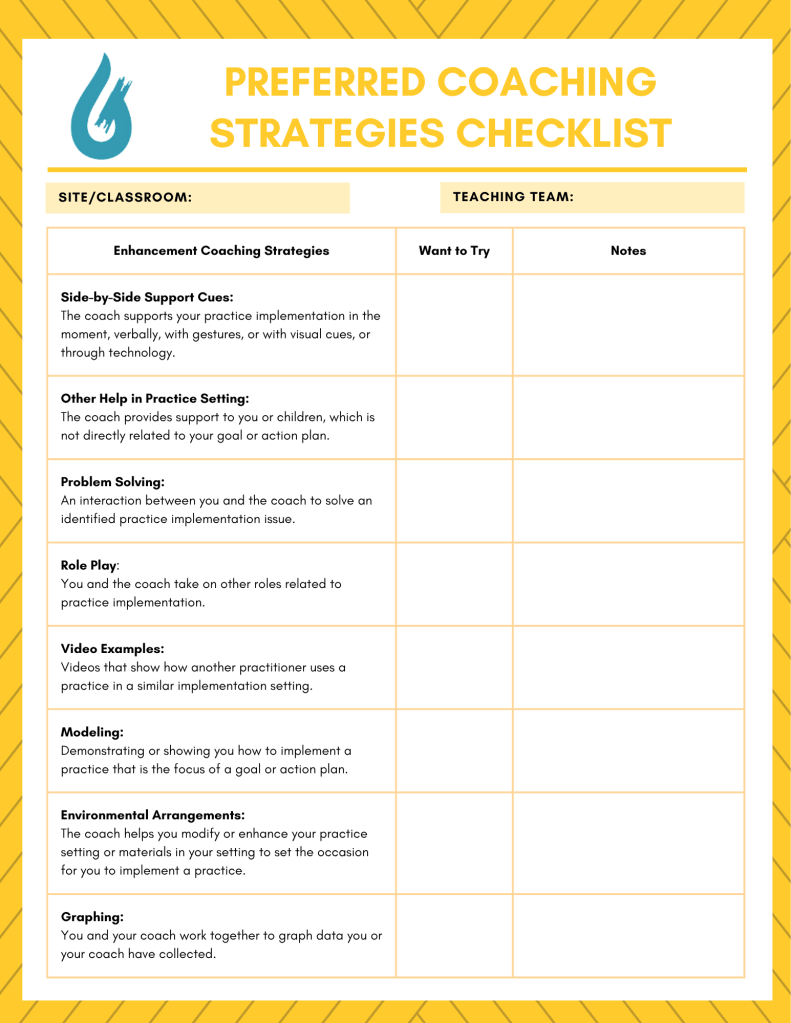
Coaching Strategies Selection Tool
This tool supported participants in identifying and selecting coaching strategies aligned to their current goals and classroom context.
Participants reviewed a range of strategies (i.e., modeling, role play, side-by-side support) and reflected on which approaches would be best to support implementation. By documenting intended strategies and notes, they created a personalized plan for use in upcoming coaching interactions.
This process helped participants move from understanding coaching strategies conceptually to intentionally selecting and applying them in practice.
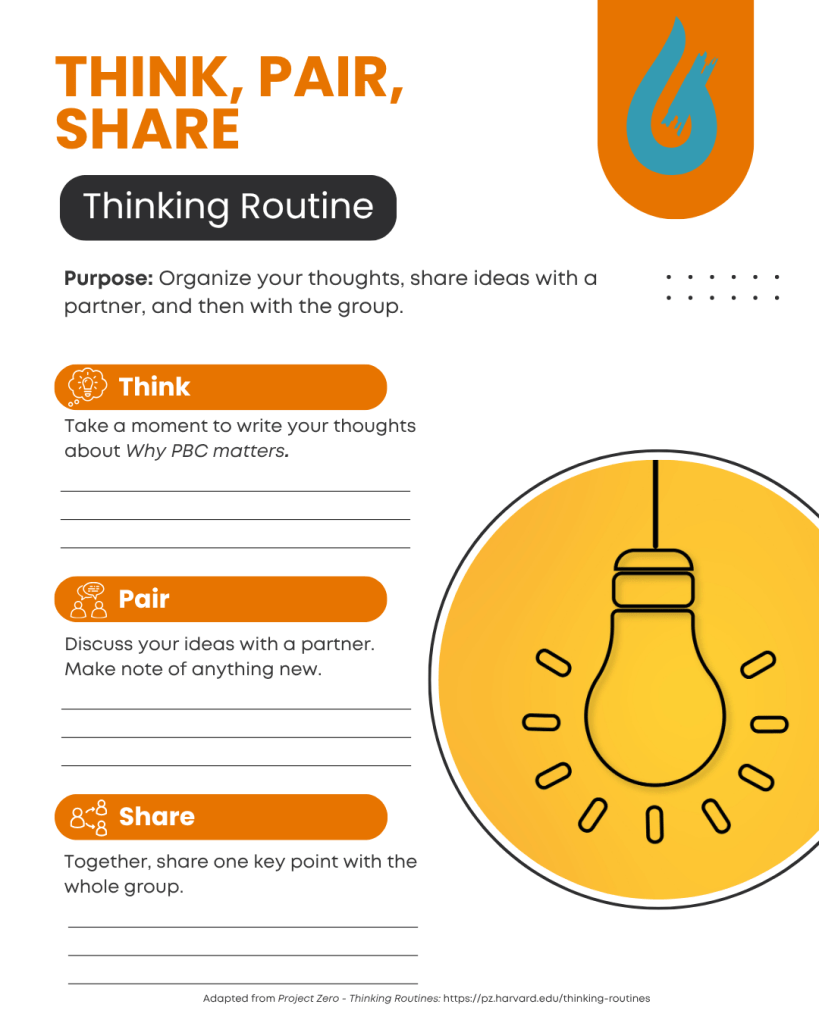
Structured Collaborative Reflection (Visual Thinking Routines)
Visual thinking routines were integrated to allow participants space to reflect with the information more deeply
This activity was designed to create space for individual reflection, peer discussion, and shared learning across participants.
Participants first reflected independently on key questions, then discussed their thinking with a partner, and finally shared insights with the larger group. This structure supported deeper processing of content while making individual perspectives visible within the group.
By engaging in this routine, participants refined their thinking, learned from others’ experiences, and built a shared understanding of effective coaching practices.
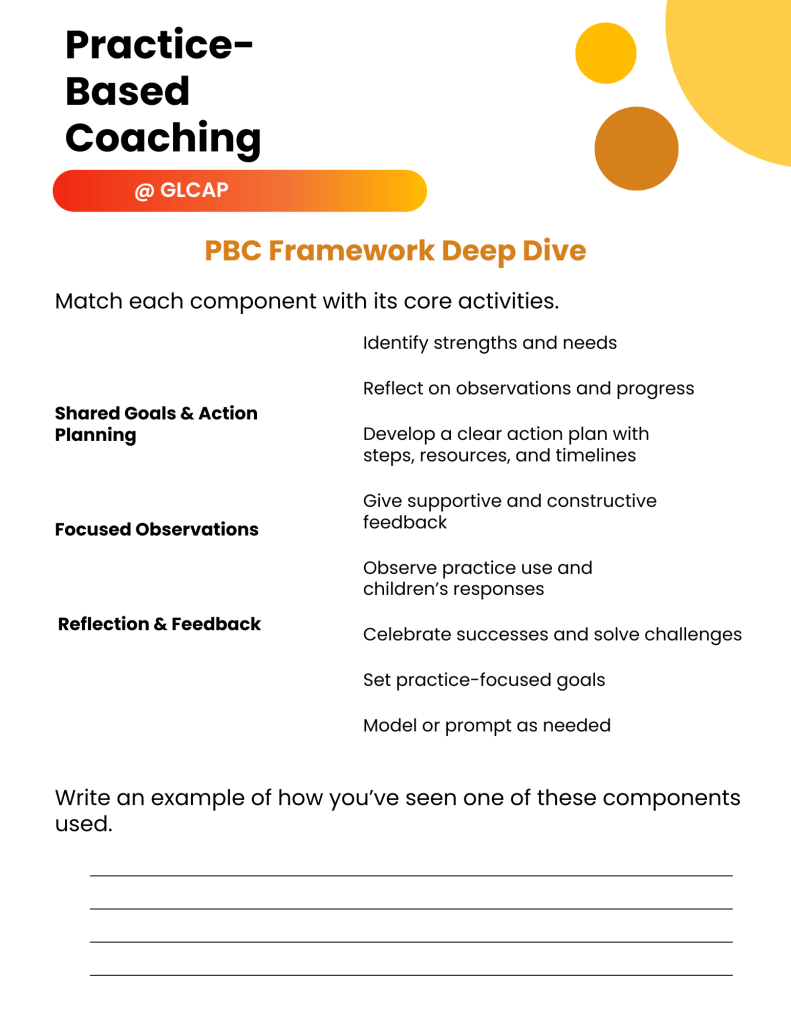
Framework Application Activity (Sample from Participant Workbook)
This activity supported participants in connecting the core components of the PBC framework to specific coaching actions.
Participants analyzed key coaching practices (i.e., goal setting, observation, feedback) and matched them to corresponding components of the framework. This required them to move beyond recognition to application, clarifying how each part of the cycle functions in practice.
The activity strengthened participants’ ability to navigate the coaching cycle intentionally and apply the framework in real-world contexts.
Sample Learning Projects I’ve Designed
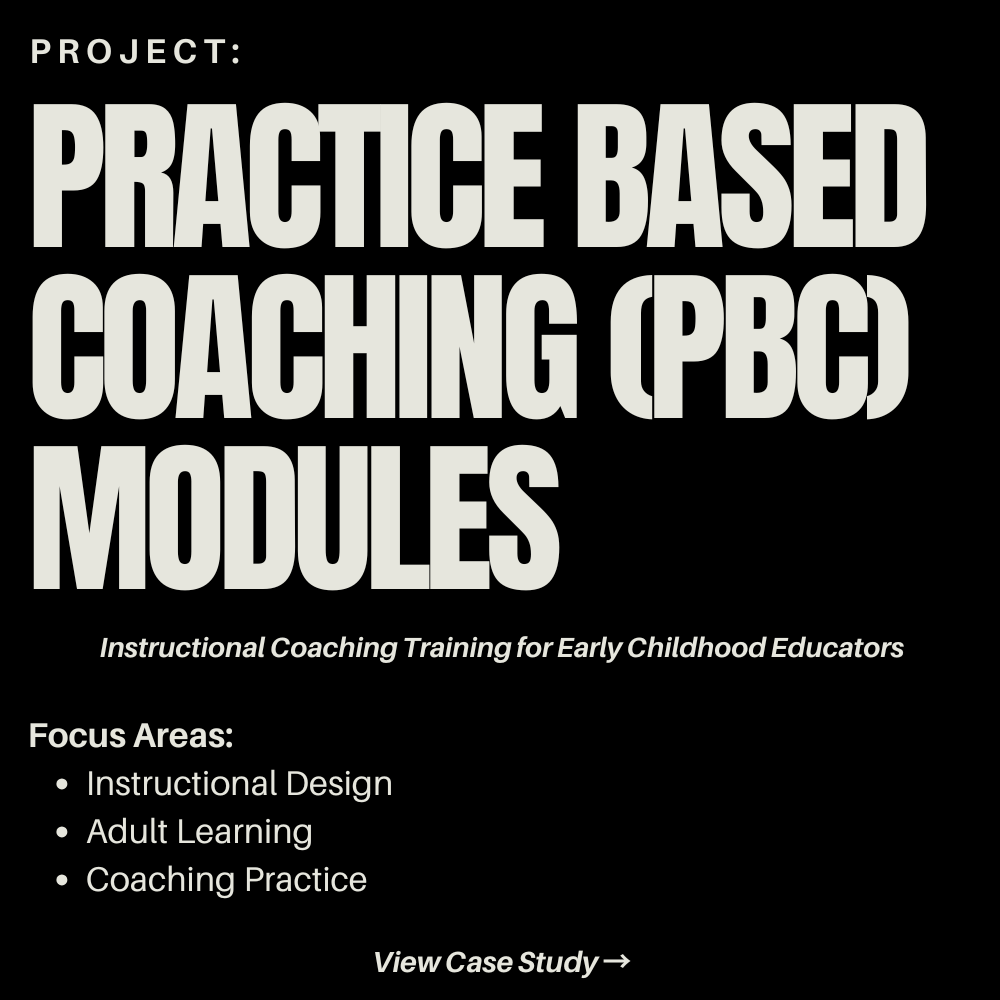
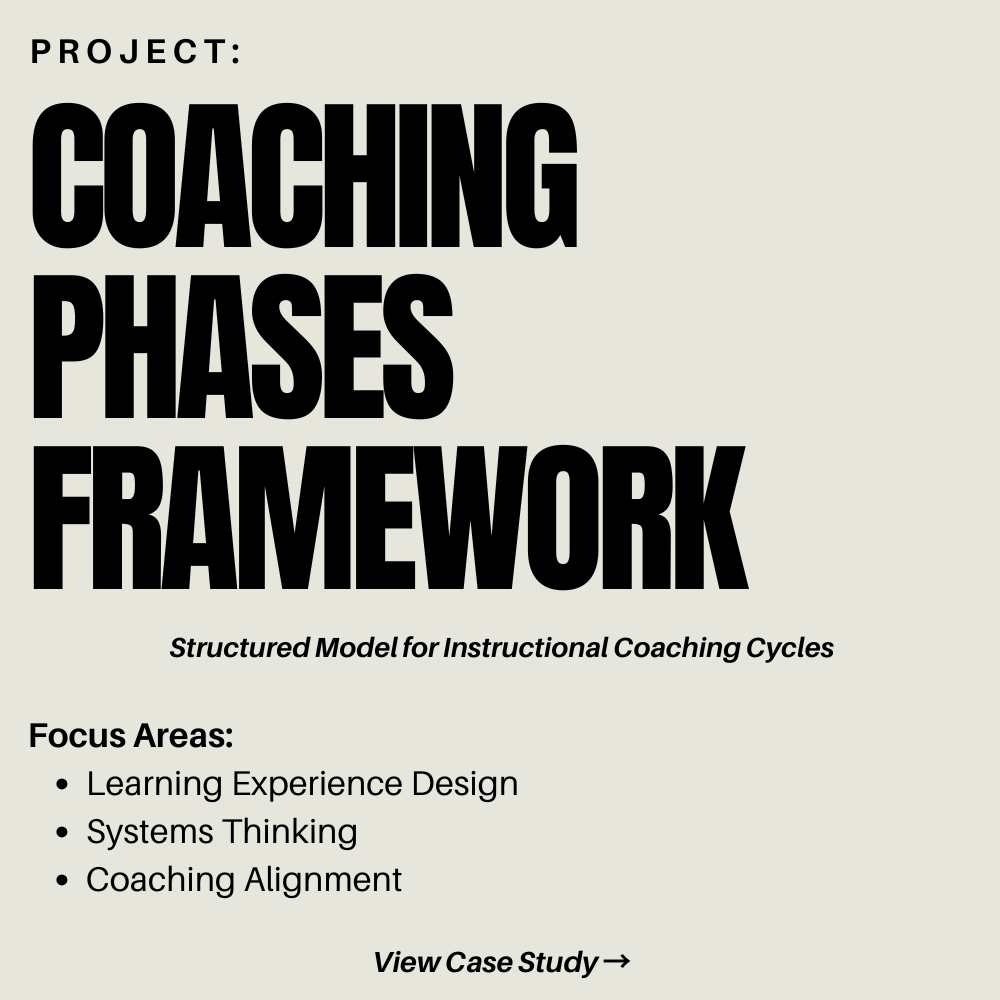
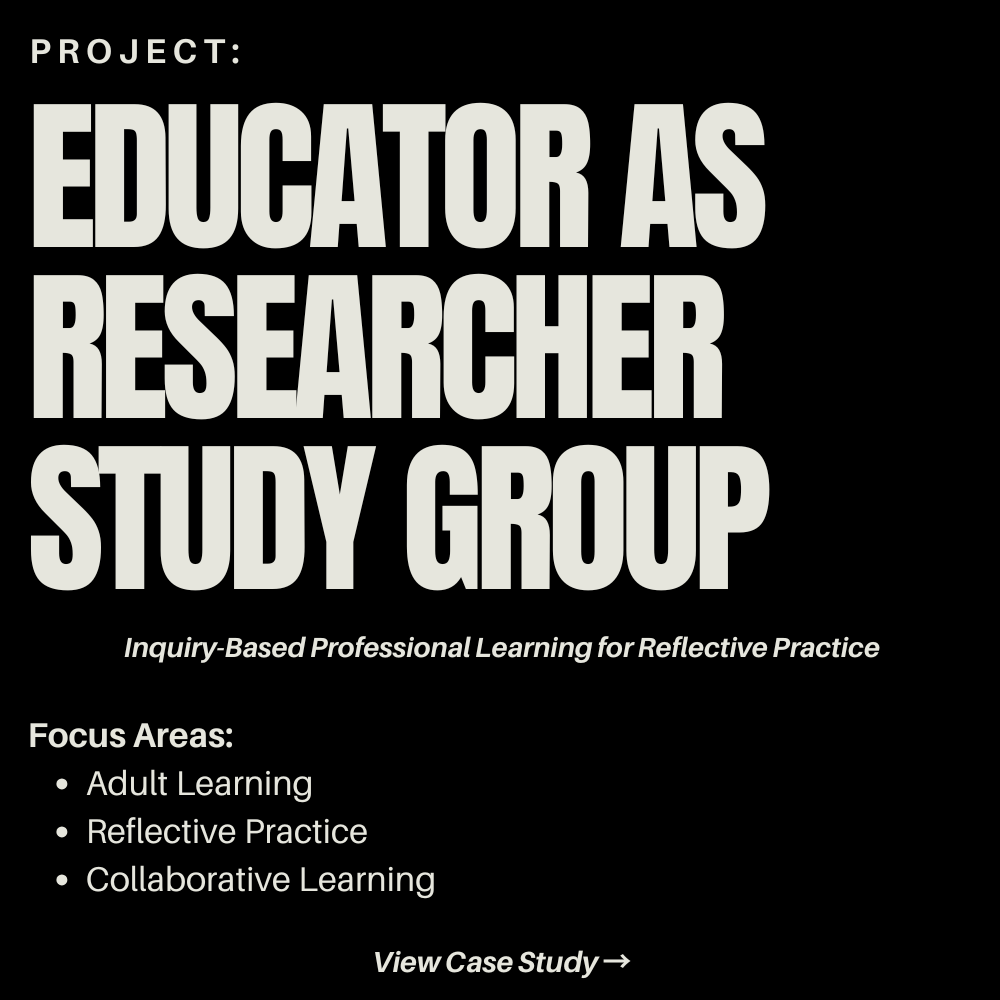
The collection below showcases projects I’ve created to support teacher growth, strengthen instructional practice, and turn big ideas into usable, engaging experience.
Full disclosure for my peers in class – the section is currently being built! Right now, clicking on New Teacher Support Group will take you to the template I’m building for the rest of my projects. (This section will be deleted before sharing my portfolio with other outside our class.)

 Jennifer Lee | Instructional Design for Early Learning